


Introduction of Langtang Valley Trekking
Trekking in the Langtang Valley is a relaxing way to experience the beautiful Himalayan region located north of Kathmandu, Nepal. This journey is a favorite among many hikers because it provides breathtaking mountain views and an immersive cultural experience. The hike starts at Syafru Besi, a highland settlement in the Rasuwa district near Dhunche, after an 8–9 hour drive from Kathmandu. The path then enters the pristine Langtang National Park, going through small communities mostly made up of Tamang ethnic people.
The Langtang Valley Trekking track offers a pleasant stroll through verdant forests with juniper trees, pine, rhododendron (National flower of Nepal), and alpine meadows. Trekkers are likely to see animals including deer, monkeys, and wild boar along the route. Rare and endangered species like Snow Leopards and Red Pandas are protected in Nepal’s first Himalayan national park, Langtang National Park, yet it can be difficult to see these reticent animals.
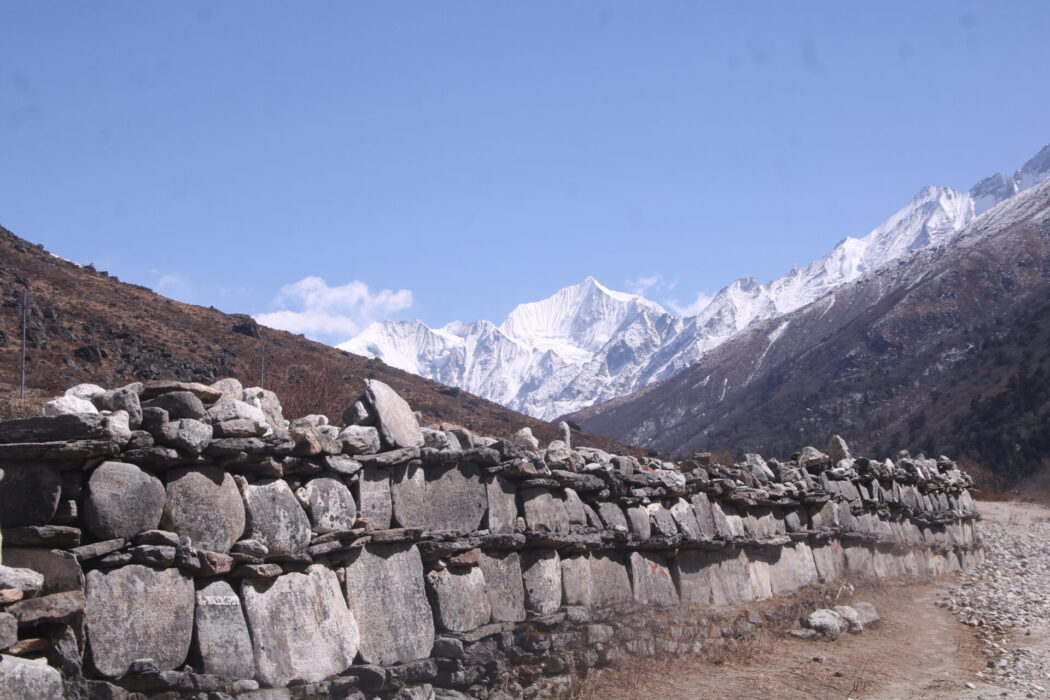
The Langtang Valley Trek, which is culturally rich, provides an in-depth exploration of Himalayan Buddhism, which is practiced in the area. Bright prayer flags, stupas, gompas, Mani walls, chhortens, and other Buddhist cultural artifacts are scattered throughout the walk. Travelers wishing to experience the rural ethnic lifestyle may find the renowned Tamang Heritage Trail located in the region to be of great interest.
Alongside its breathtaking scenery, the Langtang Valley Trek provides a rare chance to engage with Tamang culture. The distinctive cultural legacy of the Tamang people, who are renowned for their gracious hospitality, is influenced by Tibetan Buddhism. Trekkers may experience the way of life of the Tamang people by visiting their traditional villages and interacting with the locals. The Tamang Heritage Trail, which features traditional homes, crafts, and rituals, is a must-see for anybody interested in learning about other cultures.
Several important Buddhist sites are visited along the walk. Renowned for its breathtaking views of the surrounding peaks, the Kyanjin Gompa is a monastery that provides insights into local religious rituals. Mani walls, prayer wheels, and chhortens are scattered throughout the path, all of which enhance the spiritual atmosphere of the walk.
The Langtang Valley Trek is a great choice for individuals with limited time because it’s easily accessible and relatively short in comparison to other treks in Nepal. The journey seems like a lonely wilderness, with less tourists than more popular routes like the Everest or Annapurna areas, yet being close to Kathmandu.
In conclusion, the Langtang Valley Trek offers a unique combination of spiritual tranquility, cultural diversity, and scenic splendor. Trekkers may expect an amazing experience that blends the grandeur of the Himalayas with the hospitality of the Tamang people, all within a manageably short walk.
Trip Highlights
- Magnificent views of the mountains and charming paths between woods of juniper, pine, and rhododendron.
- Possibility of seeing animals such as snow leopards and red pandas, as well as wild boar, deer, and monkeys.
- The first national park in the Himalayas in Nepal, offering pristine scenery.
- Discover the distinct way of life, warmth, and customs of the Tamang people.
- Visit places of worship such as chhortens, stupas, gompas, and Mani walls.
- Savor tranquil strolls amid verdant meadows and a variety of plants.
- provides a more secluded experience in the bush with fewer trekkers than Everest or Annapurna areas.
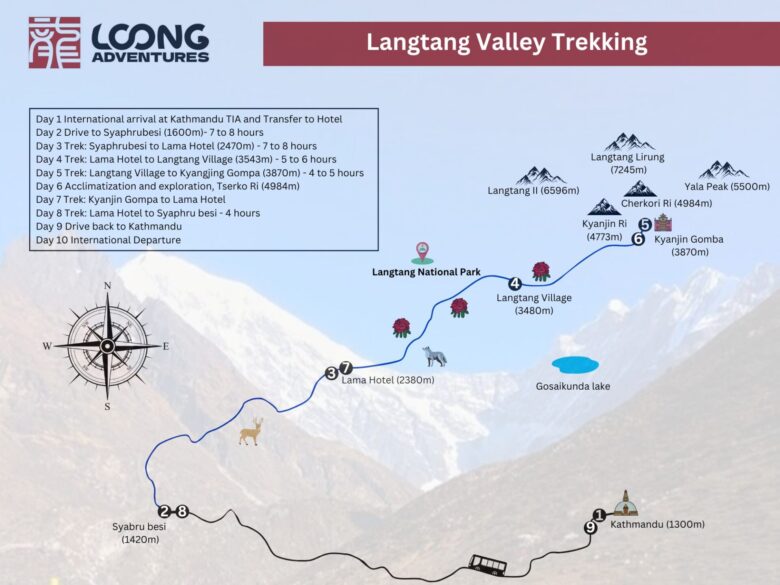
Route Map of Langtang Valley Trekking
- Guaranteed Best Prices
- Secure & Simple Online Reservations
- Change Trip Dates Easily
- Discounts Available for Groups

Photo/Video Gallery
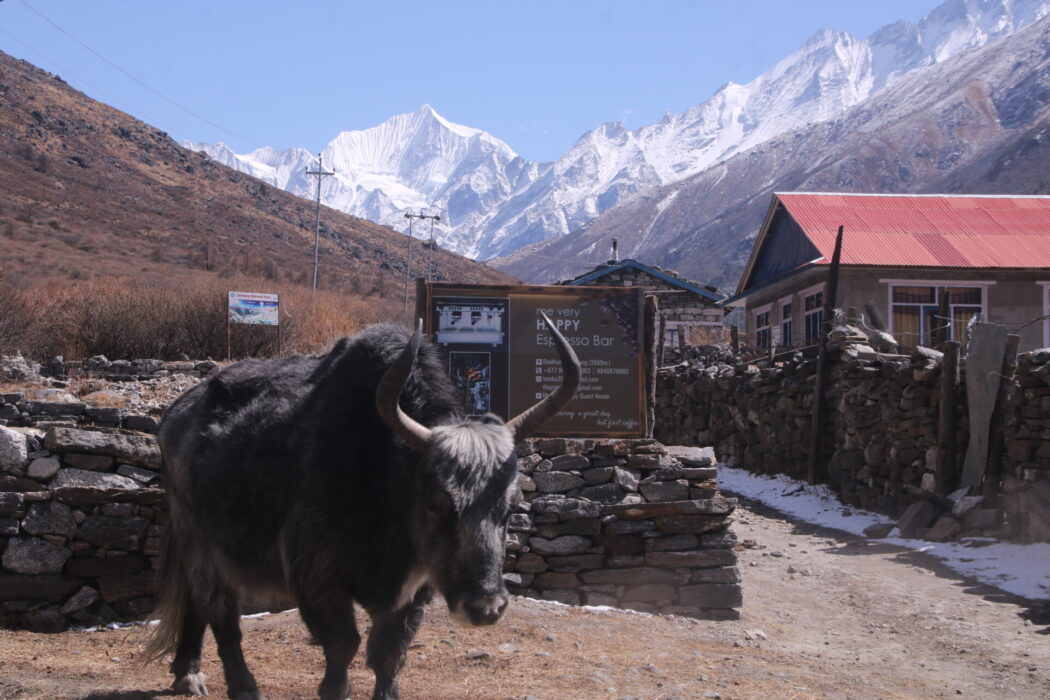
Langtang Valley Trekking
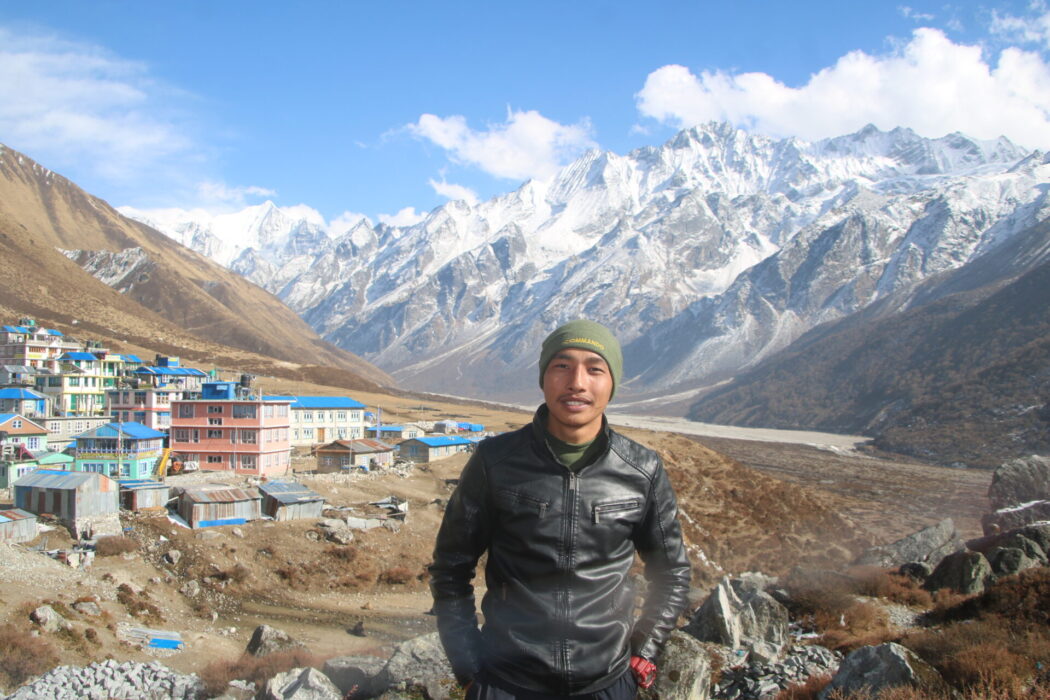
Langtang Valley Trekking
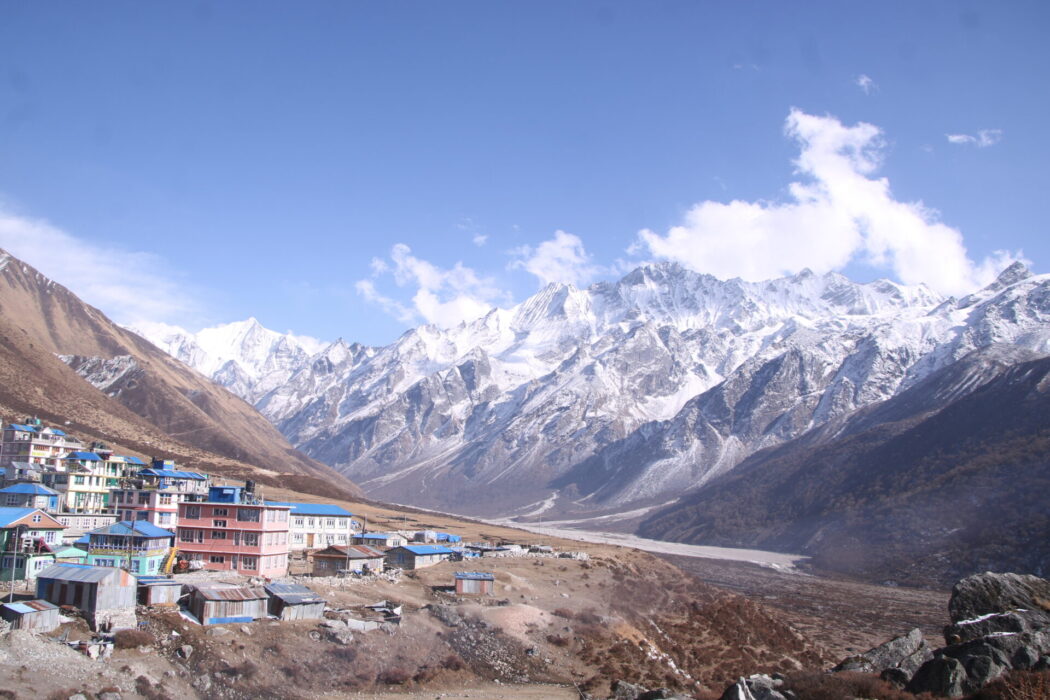
Kyanjin Gompa
Langtang
Itinerary of Langtang Valley Trekking
Day 1 International arrival at Kathmandu TIA and Transfer to Hotel
Our representative will meet you at the Tribhuvan International Airport in Kathmandu and take you to your accommodation. The goal of the first day is to rest and get used to the new surroundings. There will be a briefing on the forthcoming hike in the evening, along with a welcome supper with genuine Nepali food and answers to any questions you may have.

Activity
Arrival at TIA
Distance
4 Km
Max Altitude
1350m
Overnight Stay
Kathmandu
Meals
Welcome Dinner
Accommodation
3 Star hotelDay 2 Drive to Syaphrubesi (1600m)- 7 to 8 hours
The trip starts with a picturesque drive from Kathmandu to Syabrubesi, which is where the Langtang trek begins. You will travel through beautiful scenery on this seven to eight-hour trip, including terraced farms, historic towns, and verdant hills. The distant view of snow-capped peaks as you get closer to Syabrubesi creates an exhilarating atmosphere for the journey ahead. In Syabrubesi, you’ll spend the night in a lodge getting ready for the journey to start the following day.
Activity
Drive to Syaphrubesi
Distance
112 Km
Max Altitude
1600m
Overnight Stay
Syaphrubesi
Meals
Breakfast, Lunch and Dinner
Accommodation
LodgeDay 3 Trek: Syaphrubesi to Lama Hotel (2470m) - 7 to 8 hours
After leaving Syabrubesi, the trip officially starts when you cross the Bhote Koshi River and proceed down the Langtang River. The route progressively climbs through bamboo, rhododendron, and oak woodlands. You may see animals along the route, including red pandas and several bird species. The route climbs further after passing through the town of Bamboo to the Lama Hotel. This peaceful location offers a calm setting in which to relax and take in the surrounding natural splendor.
Activity
Trek
Distance
12 Km
Max Altitude
2470m
Overnight Stay
Lama Hotel
Meals
Breakfast, Lunch and Dinner
Accommodation
LodgeDay 4 Trek: Lama Hotel to Langtang Village (3543m) - 5 to 6 hours
Today’s trip will take you deeper into the Langtang Valley. The path goes on through the jungle, occasionally revealing Langtang Lirung. The thick woodland gives way to more open areas and vistas of the neighboring peaks as you ascend higher in elevation. Once you pass through Ghodatabela, you will finally come to Langtang Village for lunch. Trekkers are cordially invited to this reconstructed settlement, which was severely damaged in the 2015 earthquake.
Activity
Trek
Distance
8 Km
Max Altitude
3543m
Overnight Stay
Langtang Village
Meals
Breakfast, Lunch and Dinner
Accommodation
LodgeDay 5 Trek: Langtang Village to Kyangjing Gompa (3870m) - 4 to 5 hours
After leaving Langtang Village, the route progressively climbs past yak fields and tiny settlements as the mountains get bigger. You reach Kyanjin Gompa, a stunning town encircled by snow-capped hills, after a few hours of hiking. The well-known cheese factory and the nearby monastery are both open for visits. You are free to explore the region, go on little treks, or just unwind and enjoy the breathtaking views during the day.
Activity
Trek
Distance
6 Km
Max Altitude
3870m
Overnight Stay
Kyangjin Gompa
Meals
Breakfast, Lunch and Dinner
Accommodation
LodgeDay 6 Acclimatization and exploration, Tserko Ri (4984m)
Today is set up for exploring and acclimatization. There are other day treks that you may choose from, such as ascending to Kyanjin Ri (4,773m) or Tserko Ri (4,984m) for sweeping views of the Langtang range. Though difficult, these walks provide amazing views of the surrounding glaciers and mountains. As an alternative, you may take in the peace and quiet of the hamlet while exploring the glacier moraine. Today is really important for getting used to the altitude and getting ready for the trip back.
Activity
Explore
Distance
8 km
Max Altitude
4984m
Overnight Stay
Tserko Ri
Meals
Breakfast, Lunch and Dinner
Accommodation
LodgeDay 7 Trek: Kyanjin Gompa to Lama Hotel
Following breakfast, you set out to retrace your route back down the valley to the Lama Hotel. You may take in the shifting vistas and various viewpoints of the terrain you seen on the ascent as you descend. There is more time to savor the splendor of the river and forest on the speedier and simpler descent. At the Lama Hotel, you’ll spend the night thinking back on your recent high-altitude experiences.
Activity
Trek
Distance
14 Km
Max Altitude
2470m
Overnight Stay
Lama Hotel
Meals
Breakfast, Lunch and Dinner
Accommodation
LodgeDay 8 Trek: Lama Hotel to Syaphru besi - 4 hours
Following the same path, which descends through verdant trees and along a roaring river, is the hike from Lama Hotel back to Syabrubesi. On this last day of trekking, you get the opportunity to bid farewell to the tranquil surroundings of the Langtang region and enjoy the natural splendor one last time. You may celebrate the end of your journey with other hikers and villagers when you get at Syabrubesi.
Activity
Trek
Distance
8 Km
Max Altitude
1600m
Overnight Stay
Syaphru besi
Meals
Breakfast, Lunch and Dinner
Accommodation
LodgeDay 9 Drive back to Kathmandu
You will start your trip back to Kathmandu after breakfast. Traveling provides a final chance to take in the beautiful countryside before heading back to the busy metropolis. You will be taken to your accommodation after you return to Kathmandu. You have the remainder of the day to yourself to unwind, go last-minute shopping, or visit more of Kathmandu’s historical attractions.
Activity
Drive
Distance
112 Km
Max Altitude
1350m
Overnight Stay
Kathmandu
Meals
Farewell Dinner
Accommodation
3 star hotelDay 10 International Departure
Depending on when your flight is scheduled, you could have some spare time on your last day to either unwind at your hotel or continue exploring Kathmandu. When it is time for you to go, our representative will make sure you get to Tribhuvan International Airport. You go from Nepal with priceless memories of the Langtang Valley and the kindness of its people.
For those wishing to see the Langtang area, this 10-day route provides a unique combination of adventure, cultural encounters, and breathtaking natural beauty, making it an unforgettable journey.
Activity
Departure
If you are not happy with our itinerary, you can request for the modification as per your need
Includes/Excludes
What's Included?
- International Airport arrival and departure facility in private vehicle
- Two nights at a 3-star-rated hotel in Kathmandu, including breakfast
- Bus ticket for two to/from Syphrubesi
- Full board meals are provided for breakfast, lunch, and supper while hiking up the mountain.
- The best twin-sharing lodge that is offered for your mountain lodging throughout the journey
- Multitasking guide, and porters (one porter for every two persons, up to 25 kg)
- Required permits for Langtang region TIMS Card and Langtang National Park Permit
- all types of government taxes and fees for office services
What's not Included?
- Lunch and dinner in Kathmandu
- Traveler personal insurance
- Personal expenses, shopping, buying souvenirs
- International airfare
- Nepal entry visa
- All kinds of beverage (hot and cold) during the trek
- Hot showers during the trek (if needed)
- Travelers personal trekking equipment
- Tips for trekking staff
Trip Information of Langtang Valley Trekking
Langtang National Park
The fourth protected area in Nepal, Langtang National Park was established in 1976 and covers 1710 square kilometers in the districts of Sindhupalchowk, Nuwakot, and Rasuwa. The park has a variety of habitats, from tropical rainforest and alpine meadows to glacier areas, and its highest point is 7245 meters at Langtang Lirung. The fir, rhododendron, birch, chirpine, and Nepalese alder are among the noteworthy flora. 250 different bird species and endangered species like musk deer, Himalayan Thar, black bears, wild dogs, and ghoral may be found in the park. Although sightings of rare animals like the Snow Leopard and Red Panda are rare since they are nocturnal, they are endemic to this area. The Tamang Heritage Trail, the Gosaikunda Trek, the Langtang Valley Trek, and other popular hiking routes are located inside the park.
Trekkers seeking distant places are drawn to high mountain passes such as Ganja La (5120m) and Lauribina La (4600m). However, because of the absence of facilities in higher regions, they require suitable camping equipment, guides, and porters. At 4,300 meters above sea level, Gosaikunda Lake is a popular tourist attraction and site of pilgrimage. Paanch Pokhari, or Five Lakes, is also a holy place for Buddhists and Hindus. The park is bounded by the Trishuli and Bhote Koshi Rivers, while there are several minor river systems that run through the area.
Kyanjing Gompa
At 3860 meters above sea level, Kyanjin Gompa is a 400-year-old, historically significant, and revered gompa encircled by hills that provide breathtaking vistas of snow-capped mountains. Trekkers on the Langtang Valley Trek can delve further into their spiritual understanding of Buddhism by visiting this well-known Buddhist pilgrimage site. Despite the fact that not many people live in this area, Kyanjin Gompa has become well-known.
Kyanjin Gompa, a key component of the Langtang Valley Trek, is the entry point to Kyanjin Ri and Tsergo Ri, which provide breathtaking vistas of the region’s snow-capped mountain peaks, including Yala Peak (5700m), Langtang Lirung (7234m), and other stunning peaks.
Langtang Village
Situated at the center of Langtang Valley, Langtang Village is a little community that is well-known for its breathtaking natural beauty and diverse cultural offerings. Situated between lofty hills and verdant woods, the village provides a singular window into the customs of the Tamang people, who make up the majority of the population. Discover historic stone buildings, take in the stunning views of the surrounding snow-capped mountains, and appreciate the kind welcome of the inhabitants. After enduring the devastation caused by the 2015 earthquake, trekkers who are looking for adventure and cultural immersion continue to flock to Langtang Village, which has been restored.
The best time and seasons for Langtang Valley Trekking is spring and autumn/fall.
SPRING TIME OF MARCH TO MAY:
The spring begins in March and ends in May, a lively time for pleasant walks and
scenic views. Most days are fine and clear with enough sunshine hours till late
afternoon from 6 a.m. to 6 p.m. It can get overcast in the afternoon sometimes,
With chances of light rains and snowfalls.
Days are much longer with sunlight hours, but cold morning and late afternoon till
nighttime. Depending upon altitude and overnight stops en route to Kyanjin
Gompa around high Langtang Valley.
Spring is the best time for nature lovers when wildflowers are in seasonal bloom,
especially the rhododendrons of various species.
AUTUMN/FALL OF SEPTEMBER TO NOVEMBER:
The next best season is autumn/fall, most days are bright, with sunny days
for clear views. Autumn/fall starts from September to November, one of the high
seasons in Nepal for trekking.
The days are fine with a crystal clear blue sky, but the sunshine hours are short, and it gets dark soon by 5:30 p.m. Morning and late afternoon until nighttime are cold, and there are chances of light snowfall above 2,000 m high.
WINTER SEASON OF DECEMBER TO FEBRUARY:
Winter starts in December and ends in February, despite the cold months interested trekkers can enjoy Langtang Valley Trek. Most days are fine and clear with crystal clear blue sky for views and pleasant walks. However, the daylight hours are short, with late sunrise 6 a.m., and gets dark by 5 p.m.
Most days are fine for enjoying the views and walks, although freezing temperatures in the morning. Late afternoon and nighttime also have clear and bright starry skies. Expect snowfall sometimes above 2,000 meters after leaving Syabrubesi Village. Most lodges will be closed for winter, and few guest houses will be available.
To enjoy Langtang Valley Trek, the staff will try their best that you are feeling well and enjoying the daily walks. Staying fit, eating and drinking well, having good rest and sleep is the best ways to enjoy the trip around the Himalayas. As well as staying positive and expect the unexpected will make you feel better at the end of the trek. Take it as a journey not as a destination to enjoy this scenic and delightful adventure. Always take advice from your guide and learn and understand, respect the local way of life and cultures.
Although HAS (High Altitude Sickness) is not a big problem on this Langtang Valley Trekking. But all should follow the advice of your guide as per days walks and terrain wise. Few sections on trails can leads to some little difficulty, your guide and staff will always support the members on tough sections.
As for altitude sickness, trekkers need’s to drink enough fluids, water, light tea of refreshment. But not alcoholic drinks while going up, but it is safe on return journey. To safeguard from HAS, one has to walk slow having few short rest against breathlessness.
Langtang Valley Trekking difficulty, to enjoy the walk trekkers should be physically fit and in good health. The trek is not difficult depends upon the itinerary days. Choosing a flexible program for Langtang Valley will be an enjoyable adventure holiday for all types of visitors. Most itinerary has 7 nights and 8 days from Syabrubesi to Syabrubesi starting and ending point of Langtang valley treks.
The trek leads to moderate walks with a slight touch of high altitude, but the elevation gains at a gradual pace.
It is a safe and enjoyable walks, although it involves few steep climbs, but taking slow with good rest. Will overcome the difficulty, the maximum of 6 hours and minimum of 3-4 hours walks, the longest treks on a return journey from Kyanjin to Lama Hotel and Pairo. Which is a normal distance of walks around the Himalayas.
Langtang Valley is a moderate grade adventure, but the walk leads to some rough trail condition. As well with steep climb for few hours, although the trek is suitable for all age groups. But trekkers should be in average physical conditions and good health to overcome the rough and steep terrains.
All trekkers need exercise and outdoor activities like jogging, walking for an hour before and after booking the trip. Swimming, aerobic and other physical exercise is necessary to enjoy the trek to Langtang Valley and other similar adventures around the Himalayas.
In all treks around Nepal Himalayas, and Langtang Valley.
It is mandatory to obtain and purchase travel and medical insurance.
Travel Insurance in case of broken motorable road and trekking trails by sudden landslides or avalanches. Which happens sometimes, where trekking might get delayed or lead to cancellation or rerouted to other safer routes.
As well as road blocks due to political strikes which might occur sometimes without any notice. In this condition travel Insurance plays an important role to claim reimbursement from your Insurance companies back home.
Medical Insurance is important in case of unfortunate incidence like accidents, personal sickness or from HAS (High Altitude Sickness). In severe condition the patient needs immediate evacuation by any means of fast transportations.
Helicopter Service will be the perfect options to bring the sick to Kathmandu and admit in the best hospitals. For all these extra expenses incurred can claim from the Insurance with support from medical certificate.
The food and lodge accommodations on Langtang Valley Trek at designated lunch and overnight stops. Overnight accommodation and meals as per the itinerary set by Loong Adventures. The guide will book in the best available lodge for pleasant overnights and good food where possible.
The food according on the menu, from breakfast, lunch, dinner with main courses. Including snacks with warm and cold refreshment drinks, served in a nice and cozy dining room with a fireplace. In Nepal Himalaya region like Langtang Valley trek, the popular and national food and meal is Nepali Dal Bhat.
A boiled or steamed rice, served with mild seasonal vegetable curry, includes Dal, a lentil bean soup. Comes with various colors and different species along with pickles, and hot sauce as options. Meat like buffalo (substitute for beef in Nepal) and chicken are available in most lodges during the high seasons.
Can enjoy meat of vegetable fried noodles or noodle soup, along with Indian or Tibetan breads. Breakfast options for oats porridge, cereals and cornflakes followed with toast/ chapattis and pancakes includes a choice of egg variation.
Lunch and Dinner from Continental, Chinese, Indian, Nepali, and Tibetan main course with a choice of soups. But with a good food menu of limited varieties, few lodges offer fresh homemade bakery items also.
The lodge accommodation and food are of moderate standard.
The lodge accommodations from Syabrubesi, Lama Hotel, and Mundu or Langtang Village are simple with nice rooms. Most lodges offer common bathrooms and toilets. As well as having rooms on a shared basis with common bathrooms and toilets. Due to harsh terrain conditions. The plumbing systems for running water can freeze in the morning, evening, and nighttime. Due to freezing temperatures from Lama Hotel, Mundu or Langtang Village to Kyanjin Gompa, using hot showers is at an extra cost.
All lodges have electricity to light the large dining room powered by local hydro or solar power. For charging electronic items, at an extra cost per hour and for each gadget. Internet and Wi-Fi are available, but it is slow, disturbing in some places due to weather conditions. Kyanjin Gompa have good lodges provide a comprehensive food menu served in nice spacious dining rooms. In a large group with more than of 4 people, best to order a set meal for all.
Saves time and fuels energy, which is very important around remote areas of the Himalayas. Following the norms and rules of Responsible Trekkers is a good practice to practice Eco-Tourism. Taking care of garbage and litter during the whole trek. Trekkers with special dietary and for a strict vegetarian, please inform when booking with Loong Adventures (P) Ltd.
Important to know that alcoholic drinks are not healthy and good while going up to higher altitudes. But one can enjoy, after completing the main highlights, on the return journey to Syabrubesi after losing altitude to safe heights.

